Exploring Islam

If you are curious about Islam, this page is your starting point. We provide clear, reliable information to help you understand the basics of the faith, its teachings, and its practices.

Home / Exploring Islam

Learning

What is Islam?

Islam is the belief in one God and the adherence of a way of life that teaches people to live with peace, purpose, and responsibility as exemplified by the final prophet Muhammad (peace be upon him).

It's about worshipping God alone and following divine guidance that promotes kindness, honesty, and justice.

Here, you can find answers to common questions about Islam, guidance on the Five Pillars, and resources to help you explore at your own pace.

From Adam to Muhammad (peace be upon them)

A brief history of Islam's message through the ages.

Many people assume Islam began with the Prophet Muhammad (peace be upon him) in the 7th century CE, but in Islamic belief, the story starts much earlier. Islam — meaning submission to God — traces its origins to the very first human, Prophet Adam (peace be upon him).

God created Adam, granted him guidance, and gave humanity free will so that each person could choose either to follow divine instruction or turn away from it. Over time, human beings were influenced by their desires and by the whispers of the devil, leading them to stray from the path of monotheism and righteousness.

To realign humanity with the truth, God sent a long succession of prophets and messengers throughout history. These included Noah, Abraham, Moses, Jesus, and many others (peace be upon them all), each calling their communities to worship God alone and live morally upright lives.

According to Islamic belief, the final prophet sent to humanity was Muhammad (peace be upon him), who received the Qur'an in 7th-century Arabia. Muslims hold that God has promised to preserve the Qur'an from corruption until the end of time, ensuring that humanity always has access to pure, unaltered guidance.

Beliefs & Practices

A pre-requisite to becoming a Muslim is to accept the 6 articles of faith and thereupon act upon the 5 pillars.

5 Pillars of Islam

1 — Shahada (Declaration of Faith)
Believing and declaring that there is only one God (Allah) and that Muhammad is His messenger.

2 — Salah (Prayer)
Praying five times a day to stay connected to God and grounded in purpose.

3 — Zakah (Charity)
Giving a portion of one's wealth to help those in need and purify one's heart from greed.

4 — Sawm (Fasting)
Fasting from dawn to sunset during the month of Ramadan to develop self-discipline, gratitude, and empathy.

5 — Hajj (Pilgrimage to Makkah)
A once-in-a-lifetime pilgrimage for those who are physically and financially able, symbolising unity and devotion.

6 Articles of Faith

1 — Belief in Allah
The One, unique, incomparable creator and sustainer of all things, God (Allah).

2 — Belief in the Angels
Created beings who carry out Allah's commands.

3 — Belief in the Revealed Books
Divine revelations from God as guidance to mankind. Such as the Qur'an, Torah, Gospel, Psalms, and others sent to prophets.

4 — Belief in the Prophets and Messengers
Individuals selected by God to receive divine revelation to communicate to others; Including Adam, Noah, Abraham, Moses, Jesus, and Muhammad (peace be upon them all).

5 — Belief in the Last Day
That all of mankind will be resurrected in the afterlife and all their actions will be held to account on a final Day of Judgment.

6 — Belief in Divine Decree (Qadr)
That God has knowledge of all that will happen. God has power over everything, and nothing happens except by His will.

The Quran

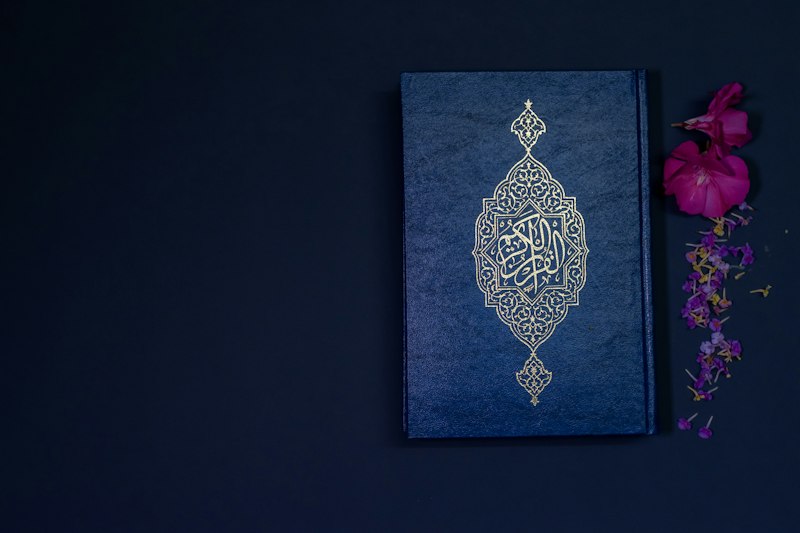
The Qur'an is the central scripture of Islam — Muslims believe it is the literal word of God (Allah) revealed to the Prophet Muhammad ﷺ over 23 years through the Angel Jibril (Gabriel). It's not seen as inspired writing or human reflection, but as divine speech, preserved exactly as it was revealed. It is the final revelation that is to be revealed to mankind until the end of time.

What the Qur'an Is

  • Language: Arabic — chosen for its precision, rhythm, and depth of meaning.
  • Structure: 114 chapters (surahs) containing verses (ayahs) that cover faith, morality, law, guidance, and reflection on creation.
  • Purpose: To guide humanity toward justice, mercy, and spiritual awareness.

Muslims recite it daily in prayer, study it for wisdom, and use it as the foundation for all Islamic belief and law.

Why Muslims Believe It Is the Word of God

  • Unchanged Preservation: The Qur'an has remained word-for-word identical since its revelation.
  • Divine Challenge: The Qur'an itself challenges anyone to produce even one chapter like it.

For Muslims, the Qur'an is not just a book of theology — it's a living guide. It teaches how to worship and connect with God, live ethically and compassionately, seek justice and balance in society, and reflect on life, death, and purpose.

Muslims follow it because they believe it is God's direct message, preserved without change, offering truth for every time and place.

Have a Question?

Whether it's a simple question or something you've been thinking about for years — we're here to help. Reach out confidentially.

Ask a Question New Muslim Support